|
MARIETTA, GA 08/2013
Wet wells are typically located underground, usually with two pumps, sometimes more. The pumps are used to move material from the wet well into the underground pipes. Monitoring the level in the wet well prevents the well from overfilling or from running dry. Overfilling of a wet well can cause spills of raw sewage, which is costly to clean up. Also, running a wet well dry can cause damage, even destruction, to the pump. Either situation can be costly.
Monitoring the level in a wet well can be done with many different technologies. As with any control system, there are pros and cons to each. In my opinion, non-contacting methods of level measurement are the better choice when it comes to monitoring the level in a lift station.
Installation, overall maintenance, and ease-of-use are just some of the benefits of non-contacting technology. The two main non-contacting level sensor technologies are ultrasonic level and microwave (radar) level measurement. Both are reasonably priced and work well in these applications.
Ultrasonic Level is the primary choice in technologies for monitoring the level in wet wells.
Here are the benefits:
-
The sensor and controller can be separated, allowing for easier access to the controller for general readings, maintenance or troubleshooting.
-
The controllers come equipped with relays that can be used to control the pumps, as well as high and low level alarms.
-
Ultrasonic controllers have the ability, in some cases, to bring in a signal from a different technology to measure the level and still have all the control functions for relays and pump control algorithms and remote display of the level.
Things to consider when using ultrasonic level technology in wet well applications.
Foam is not a friend to ultrasonics. Just like radar, depending on the type of foam that is present, ultrasonics can struggle with getting a valid reading. Ultrasonics, in general, may
have issues with operating near Variable Frequency Drives (VFD), due to the EMF emitted from the drives, and the ultrasonic device’s operation frequencies.
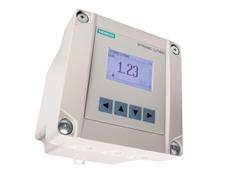
The new SITRANS LUT400 controller has advanced signal processing, electronics, and new digital technology. These advances have improved the operation of ultrasonic level in noisy environments. The new digital receiver and next generation Sonic Intelligence in the SITRANS LUT400 has shown great improvements in wet well applications where we have struggled in the past.
The new digital receiver is proving that the LUT400 controller can operate right next to VFDs and give reliable measurements and control. The new digital filters are able to clip
out the noise that is generated by the VFDs, allowing the LUT400 controller to focus on the signal from the echo. The LUT400 can adapt to changing process conditions because of new algorithms that are continuously evaluating and adjusting for noise level, noise characteristics, echo strength and confidence. The LUT400 controller has Siemens most sophisticated signal processing engine. Does this mean that the LUT400 is immune to noise? No. It is not noise immune, but we are seeing improvements in operation when noise is present.
Along with the LUT400 controller, you should also recommend a point level solution. Siemens has a version to fit most applications: rotary paddle, vibration, capacitance and ultrasonic. Contact the applications engineering group for assistance if you are not sure what to use in your application.
|

