|
A critical aspect of innovation is corrosion testing, which plays a pivotal role in validating coating performance and ensuring long-term reliability. Employing a range of accelerated and real-world simulation methods—such as salt spray (ASTM B117), cyclic corrosion testing (ASTM G85), and electrochemical analysis quantifies degradation rates, adhesion strength, and protective efficacy.
By embedding corrosion testing into the R&D workflow, manufacturers can ensure that coatings meet stringent performance standards across diverse industries. This approach not only enhances product durability but also supports sustainability goals by reducing maintenance cycles and material waste.
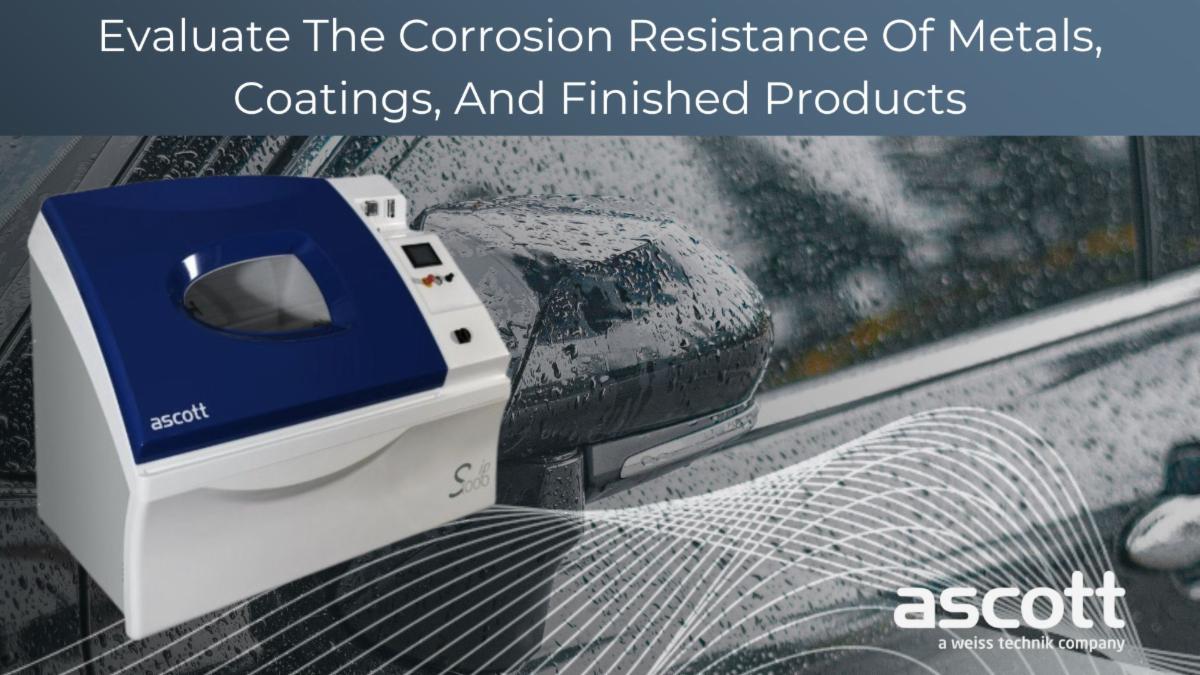
Corrosion testing using an Ascott cyclic chamber is essential to validate the durability and protective performance of products under accelerated environmental conditions. This advanced testing method simulates real-world cycles of humidity, salt spray, and drying, helping ensure coatings provide long-lasting protection against corrosion in diverse applications.
As standard, Ascott Analytical chambers are supplied with the ability to create six distinct climates:
- Salt spray
- Condensation humidity
- Forced air drying
- Temperature Only
- Ambient drying
- Controlled humidity
|